
Lapis Lazuli
Thought · Expression · Awareness
☽ ✧ ☾
What Is This Crystal?
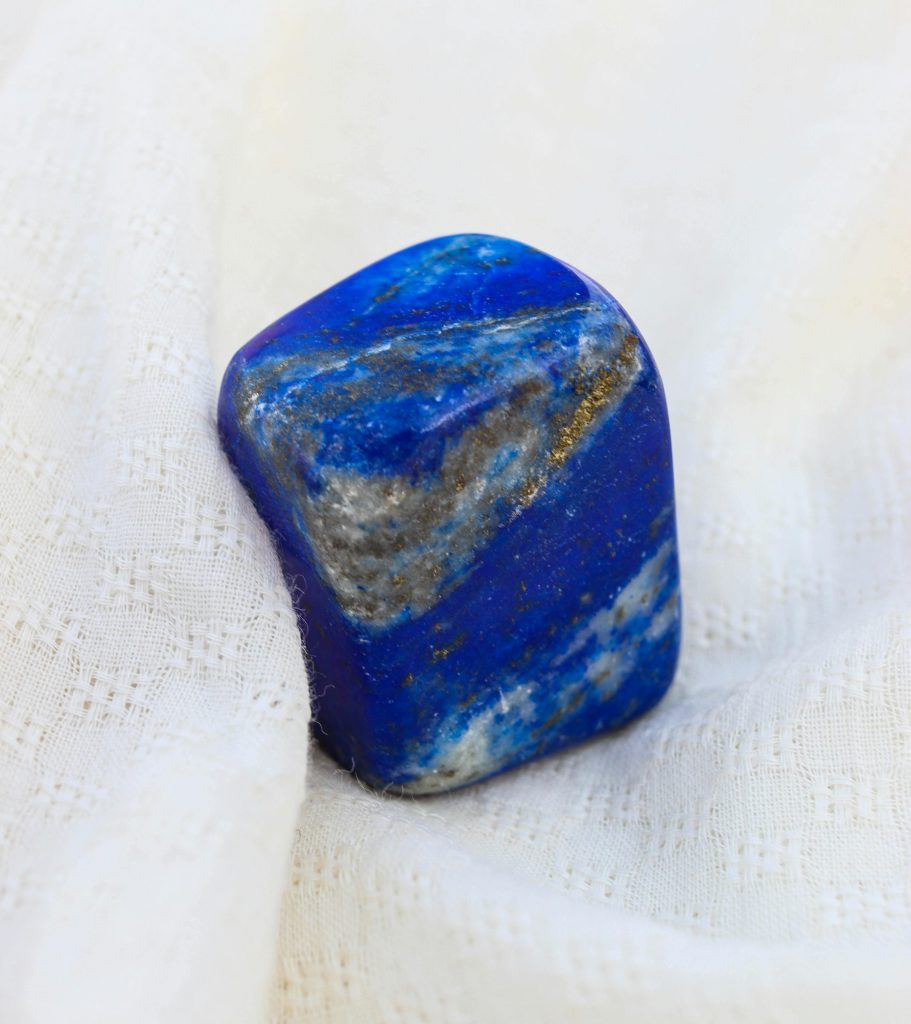
Lapis Lazuli is a deep blue stone composed mainly of lazurite, often flecked with golden pyrite and white calcite. Its rich colour has made if highly valued for decorative and artistic use throughout history.
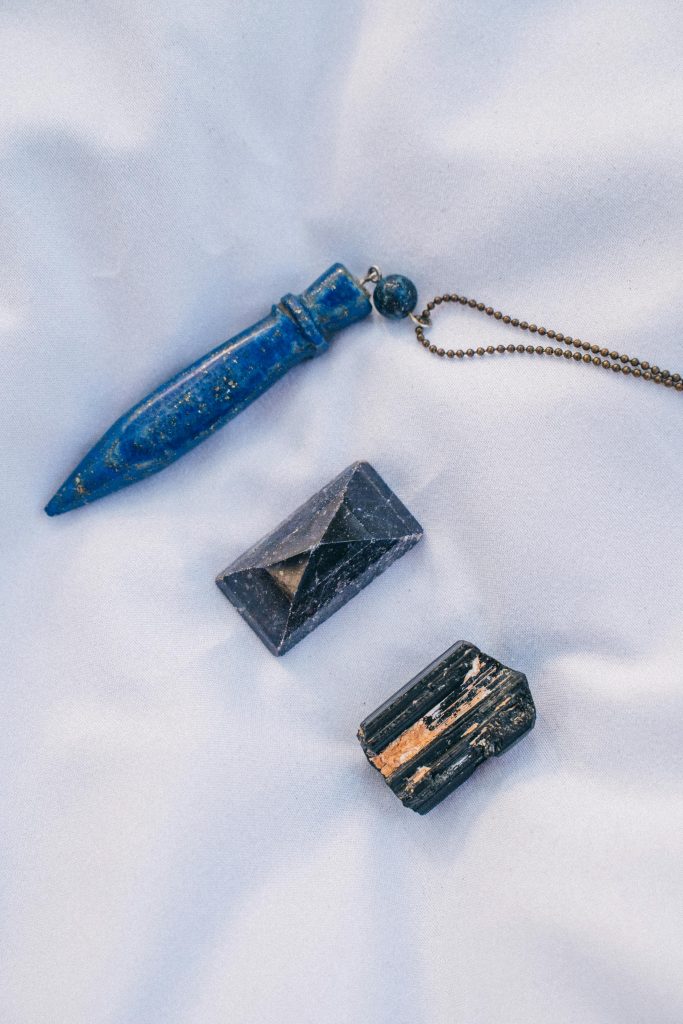
Rather than forming in pointed crystals, Lapis is usually found in solid masses, polished to reveal its striking celestial tones.
Historical & Cultural Lore
Lapis Lazuli has been treasured for thousands of years, appearing in carvings, pigments, and adornments. Its deep blue colour has been associated with the night sky, knowledge and inner vision.
In symbolic traditions, it has represented truth, insight, and communication – meanings inspired by its vivid, expansive hue.
☽ ✧ ☾
Symbolic Associations
In symbolic traditions, Lapis Lazuli is often linked with:
- Wisdom
- Self-expression
- Inner awareness
These themes suggest thoughtful communication and reflective understanding.
Ways People Work With It
Some people include Lapis Lazuli in reflective practices by:
- Keeping it near a workspace or creative area
- Holding it during journaling or reflection
- Using it as a reminder to speak with clarity
- Pairing it with study or learning environments
These uses are symbolic and personal rather than prescriptive
Elemental Connection
Elemental Energy: Air Dragon
Lapis Lazuli’s associations with thought, expression, and awareness link it symbolically with the Air Dragon, guardian of clarity and understanding.
Pairing Suggestions
Lapis Lazuli is often paired symbolically with:
- Tiger’s Eye – for confidence in expression
- Clear Quartz – for clarity and focus
- Sodalite – for thoughful communication
Pairings reflect complementary symbolism rather than structured systems.
With its deep sky-tones, Lapis Lazuli reflects the vastness of thought and expression – a reminder that insight often grows in quiet reflection.
Crystal meanings are rooted in tradition and symbolism rather than science. Personal experience and intention play an important role, and there is no right or wrong way to work